
How San Leandro Residents Are Found
Begin with the clue already in hand. A full name opens several doors: a court party search, a license record, a business filing, an obituary request, or the State Controller's unclaimed-property index. A street address points first to Alameda County's parcel map and Assessor data. Dates and family relationships make California vital-record rules easier to apply. An older address often belongs on a directory shelf instead of a modern web index.
The official trail is layered. The Assessor map identifies a parcel, its situs and mailing addresses, values, exemptions, and the latest instrument reference. But its public feature layer carries no owner-name field. The Recorder index is keyed to parties, not streets. A voter tool is personal or purpose-limited rather than a public name browser. Library directories can show a listed household, though omissions and changing addresses are normal, and guests never appear in one public roll.
Use the least ambiguous source first. Confirm with a second custodian. Match the person, parcel, date, or role across both.
- Standardize the address and confirm the city and ZIP with USPS.
- Search the Alameda parcel map and save the APN, situs, mailing fields, and latest document reference.
- Use the Clerk-Recorder party index to inspect the deed or other instrument tied to that parcel.
- Choose the lawful voter, court, business, license, or vital-record channel that fits the question.
- For an earlier household, compare San Leandro directories, census schedules, newspapers, and maps.
San Leandro Resident Records Offices
San Leandro is an incorporated city in Alameda County, but Oakland, the county seat, holds the main record counters. The Alameda County Clerk-Recorder files deeds, liens, plats, births, deaths, marriages, fictitious business names, notary records, and professional registrations. Its official-record archive reaches back to 1853. The electronic party-name index spans 1969 to the present. Earlier research relies on office microfilm.
The Assessor answers a different question. Its property map ties a parcel to physical and tax-mailing addresses, assessed values, exemptions, use codes, and a latest document clue. The California Secretary of State controls voter-file access. The free My Voter Status tool lets a person check their own registration only. Together these custodians form a useful residents-directory map. None of them turns public records into an unrestricted roster.
Alameda County Clerk-Recorder
1106 Madison Street
Oakland, CA
510-272-6362 / 888-280-7708
Official records and copies
Alameda County Assessor
1221 Oak Street, Room 145
Oakland, CA
510-272-3787
Assessment information
California Secretary of State Elections
1500 11th Street, 5th Floor
Sacramento, CA 95814
916-657-2166
My Voter Status
San Leandro Resident Records Counter
Oakland appearing on a San Leandro records trail is no locality mistake. Alameda County was created in 1853. The property archive begins that same year. San Leandro was the original county seat before county functions moved to Oakland, so a deed, vital copy, or counter instruction can send a researcher across the city line even when every parcel or person of interest is in San Leandro.
In-person Clerk-Recorder service runs Monday through Friday, 8:30 a.m. to 5 p.m. Printing stops at 4:15 p.m.; recording stops at 4:30 p.m. Noon to 2 p.m. is the busiest period. Index research is free. Plain copies run $3.50 per page. Certified copies cost $4.50 for the first page plus $3.50 for each additional page, and an online order adds a $2 fee. Mail requests need a usable identifier and a self-addressed stamped envelope. The stated window is five to ten business days.
That access pattern shapes a resident search. A web result may supply an instrument number, but the copy comes from the custodian. The index can show a party relationship. It cannot prove that person lived there.
Counter tip. Bring spelling variants, party role, approximate date, and the APN or legal description. These beat a surname alone when a record is older or the index is crowded.
San Leandro Resident Property Map Fields
The Alameda property portal takes an address or parcel number. Its autocomplete search suggests matches as you type. A partial match scans the whole county. It returns at most six suggestions or results. Choosing a map polygon opens the parcel popup, and the viewer beyond that offers measurement tools, bookmarks, a basemap gallery, a layer list, an attribute table, transparency controls, labels, and details or download controls.
The public parcel layer earns its keep one way. It bridges an address to a later deed search. It does not name every resident. A typical San Leandro result shows the APN, book/page/parcel/subparcel pieces, situs number and street, city, and ZIP and ZIP+4. It also lists land and improvement values, the homeowners exemption, any other exemption, total net value, the latest document prefix, series and date, the mailing address, use code, and economic unit. No owner-name or sketch field appears.
| Search input | Address or parcel number; one term, with partial matching and six-result cap. |
|---|---|
| Parcel identity | APN plus book, page, parcel, and subparcel components. |
| Address fields | Situs number, street, unit, city, ZIP, ZIP+4, and composed mailing address. |
| Assessment fields | Land, improvement, CLCA, homeowners exemption, other exemption, and total net value. |
| Latest instrument | Document prefix, series, and date, which can guide a Recorder request. |
| Not shown | Public owner-name and sketch fields are absent; occupancy is not established. |
A map result is a parcel clue, not a household list. A mailing address can point to another place entirely. A homeowners exemption supports only a cautious principal-residence inference. The assessment portal image shows the address-first doorway used by the San Leandro residents directory.
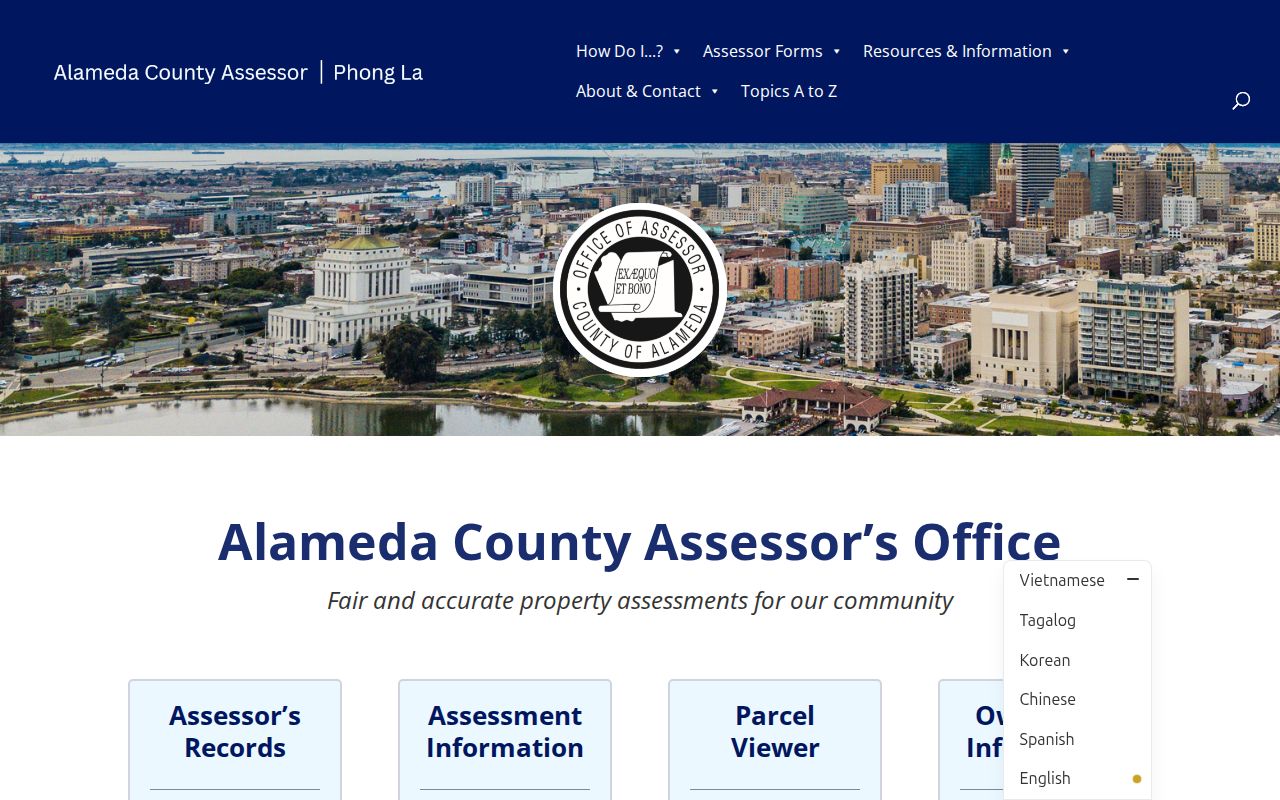
The county's public parcel layer leaves owner names off the map by design. For owner identities, skip the layer and go to the Recorder's index instead.
San Leandro Resident Voter Data Access
My Voter Status answers a personal question, not a neighborhood one. It tells a registered voter their polling place, districts, ballot materials, and whether a vote-by-mail or provisional ballot was counted. It cannot browse San Leandro names by street. California's statewide voter file is a different thing. Under Elections Code sections 2180 through 2194 and related rules, it can carry registration and residence details, party preference, precinct, status dates, and how a person voted, whether at the polls or by mail.
The file is released only for allowed purposes. Election work, political activity, scholarship, journalism, government functions, and record review all qualify. An applicant chooses a statewide, county, or limited specific-voter file. The application requires contact details, identification, the scope and intended use, the specific voter where relevant, security recipients, a wet signature, and payment. Fees run $15 per 1,000 records, capped at $100 statewide, or $30 per specific record up to ten records and the same $100 cap. No street-wide roll comes through the self-service status form.
Current San Leandro Resident Sources
Treat a current residents directory as a toolkit rather than one database. Each source answers a different question about San Leandro. The city staff directory names public-facing personnel, not ordinary residents. Neighborhood groups open contact paths yet never publish member rosters. A business or professional license can tie a person to a public business address. That address is not proof of a home.
| Source | What It Lists | Keeper | Access |
|---|---|---|---|
| Parcel and tax layer | Parcel clues, addresses, values, exemptions, latest instrument | Alameda Assessor | Free public map |
| Recorder index | Parties to deeds, liens, plats, and other instruments | Alameda Clerk-Recorder | Free index; copies cost |
| Voter status and file | Registration status or lawful extracts | California Secretary of State | Personal or qualified access |
| City staff directory | Selected public-facing city staff | City of San Leandro | Free online |
| Business and license files | Entity officers, agents, license status, public business address | State and county custodians | Free searches |
| Community contacts | Organizations and public contact routes | City and local groups | Contact only, no roster |
Match the tool to the question. The San Leandro resident lookup fits when a task narrows to one person. That happens when you start from a place. When the question is every parcel along a road, use the street lookup instead. For an earlier year's listings, the historical directory book is the right record.
San Leandro Resident Court Search Channels
The Alameda Superior Court portal directory splits access by case type. The types are civil, family, probate, mental health, adoption, criminal, and traffic. The registered eCourt portal handles civil and related cases. It offers name search, case-number search, calendar search, public reports, document downloads, and case payment. A name search costs money and returns up to 1,500 cases. Up to ten are shown for the found name. A case-number search can display parties. It can also display a Register of Actions, minutes, future hearings, and available images.
Criminal public information runs through Odyssey, with activity since 2005. The traffic channel covers citations from the preceding three years. Court staff will not research a case by phone or email. Public terminals show qualifying information and documents without remote web charges. Federal cases belong to the Northern District of California or PACER. A clean Alameda civil search clears nothing else; criminal, traffic, and federal channels stay separate.
Probate records are a strong trail for a deceased person's address. A case can lead to a petition. It can also lead to public heirs or notices and a later recorded instrument. Sealed, juvenile, adoption, confidential family, mental-health, and victim information may be excluded or redacted. The official public portals page lays out these separate pathways. That is the best guard against a false "no record" conclusion.
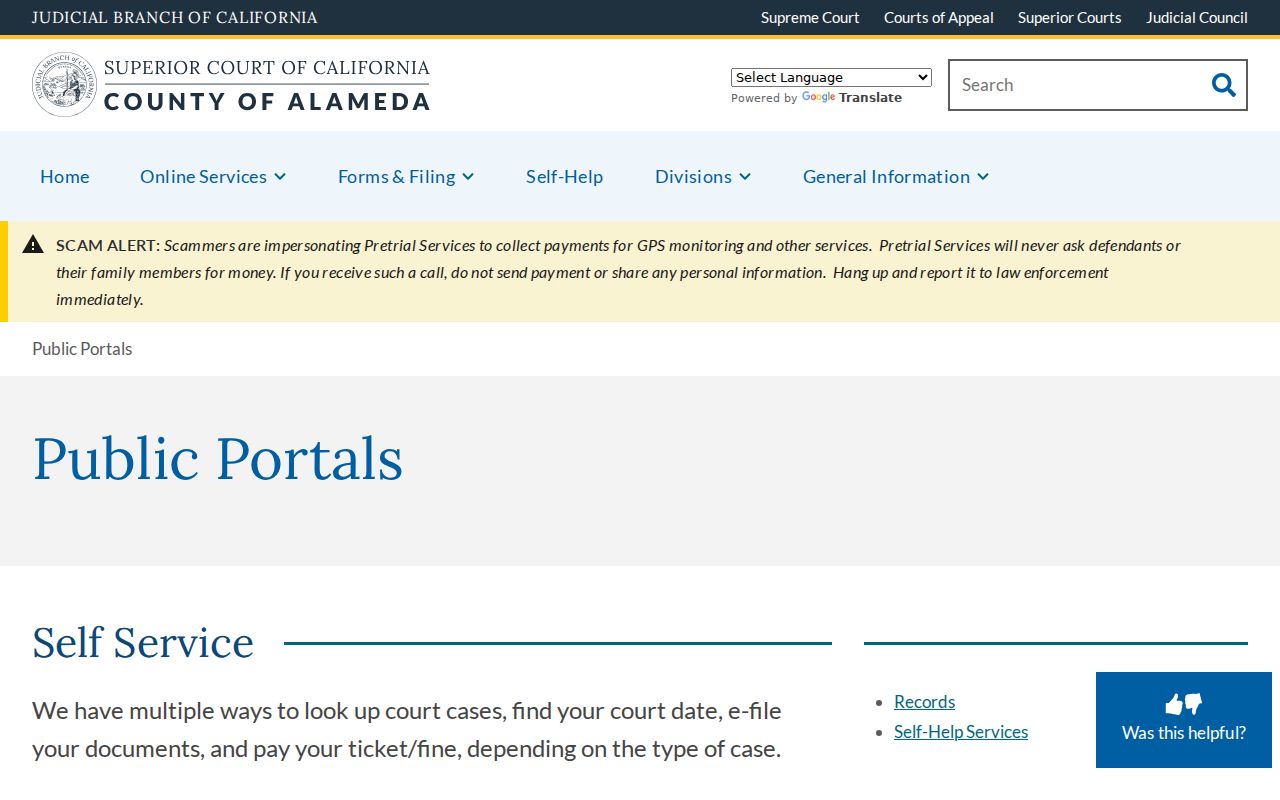
Come up empty in eCourt? Run the same name through the criminal, traffic, and federal channels when your question calls for it. Sealed and confidential matters stay out of public results.
San Leandro Resident Deeds Before 1969
The Alameda Recorder's electronic party index begins in 1969. That year is a search boundary only. It does not mark the start of San Leandro's land history. Deeds recorded from 1853 through 1968 live on office microfilm at the Oakland counter. A single image can hold the grantor and grantee, title form, APN, legal description, and consideration. Signatures and recording data appear too. So do the documentary-transfer-tax or exemption boxes. Street names can shift over time. The legal description and instrument reference are the bridge.
Work backward from a current parcel. First save the latest document prefix, series, date, and APN from GIS. Pull that instrument and read the grantee and grantor. Then search the grantor as an earlier grantee. Keep the legal description in view and repeat. Some sellers' names branch across many parcels. Lot, block, book, page, and APN details matter most. They keep your chain tied to the one property you care about.
This is also the moment to check copy costs before you pay. The official office charges by page and certification level. A private mailer may charge far more for a marked-up profile. Confirm the instrument number with the Recorder before paying any intermediary.
San Leandro Resident Business Trails
A residence question is sometimes really an affiliation question. California bizfile Online answers it from the state level. The entity search may show status, jurisdiction, and formation or registration dates. Filing history and Statements of Information appear too. Addresses and agents may appear as well. The State Controller's unclaimed-property index adds a different clue. Search by last name or business name, optionally with first name, city, or ZIP. A result may show the reported owner, reported address, property type, holder, and property ID.
The Department of Consumer Affairs license search filters by board, license type, number, or business and person name. It also filters by city, county, or ZIP. Results commonly show licensee, number, status, and issue or expiration details. Discipline links appear there too. Alameda FBN filings connect a local DBA to a person. None proves a public address is a home.
Pair three levels when identity is the question. Use the state entity, the county FBN, and a city business license or regulator. Treat an agent's address as a possible service-company address, not a San Leandro household. Start with the Secretary of State business search for an entity name or number.
Entity trails lead to county filings or a city license. They suit business identity questions, not a private San Leandro household.
Historical San Leandro Resident Directories
The History Room anchors local directory research. The San Leandro Public Library holds Hayward and San Leandro city directories there from 1925 through 1965, alongside newspapers, Sanborn maps, and a historical photo and document collection. Yearbooks start in 1933. Census material spans 1852 through 1920. Find the room on the second floor of the Main Library at 300 Estudillo Avenue. The collection is noncirculating, library use only. Hours run Tuesday through Saturday, staffing is volunteer-dependent. When it is closed, staff say most requested material can still be retrieved to the main desk.
Oakland Public Library supplies the complementary shelf. Polk San Leandro issues cover 1955-56, 1959, and 1965. Combined Polk Hayward and San Leandro volumes include 1948 and 1951. Haines East Bay and Southern Alameda criss-cross directories run from 1973 through 1982 and from 1984 through 2019, leaving a 1983 gap. Haines turns an address into a listed occupant or phone clue, though it remains a directory, not a complete census.
Newspapers matter too. The San Leandro Reporter runs from 1879 to 1951, with later titles moving through Standard, Observer, News, Morning News, Daily Review, and San Leandro Times. Broken runs mean a missing notice proves nothing. The full historical treatment belongs in the San Leandro city directory collections.
Before interpreting an old result, separate four terms:
- Roll
- A maintained list or record set, such as an assessment or voter file, with a defined purpose.
- Index
- A finding aid that points to a record; it may not include the full image or every field.
- Criss-cross directory
- An address-first directory that reverses the usual name-first order and may list a phone or occupant.
- Parcel
- A mapped unit of land identified by an APN, not a synonym for a household.
San Leandro Directory Photos
Photos add a human layer that modern property fields lack. The city's historic photo database works through the library catalog. Switch the collection selector to History Collection, search by person, street, or business, and open the result. Its URL or View control identifies the record. The history overview describes more than 2,200 searchable photo and document records, while the broader collection overview cites 7,000-plus local and California books and 2,500-plus photos. The scopes differ. Do not combine the totals.
Statewide digitized collections help locate partner-library material. California State Library history holdings add books, newspapers, maps, directories, photographs, and ephemera. Oakland repository titles still matter here. Oakland is the county seat, and many East Bay collections carry regional labels.
The San Leandro library catalog and history entry point is the useful first stop for the local request gateway. A name in a photo is only a lead. It is not proof of residence on the date of the image. Alameda's official Clerk-Recorder page gives the modern deed route.

The Recorder image anchors the San Leandro residents directory in the county custodian of the named instruments. The California voter-status form is a personal check. It is no open roster.
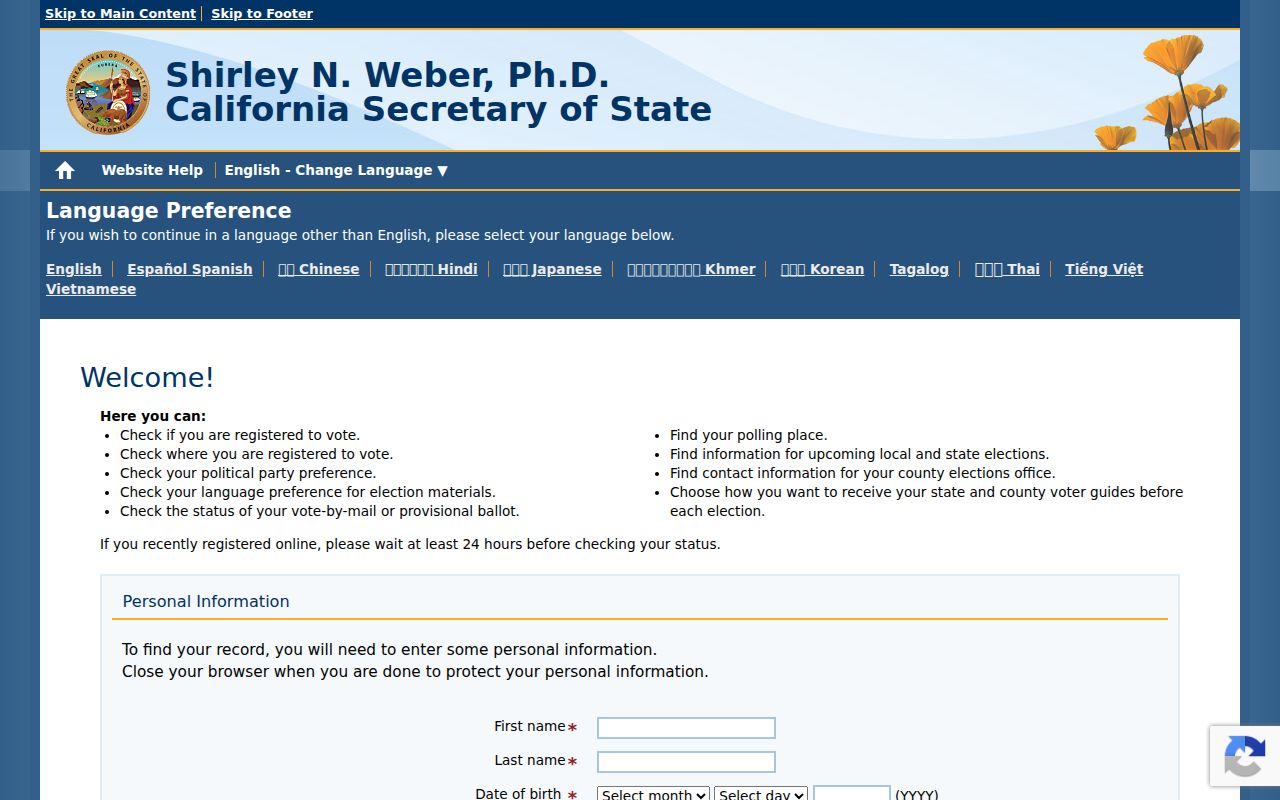
That distinction keeps a resident lookup within the access rules described by California law.
San Leandro Permit And Request Trails
County rolls answer some questions about San Leandro, but the city holds its own paper. Permits, code cases, agreements, correspondence, and rosters all sit in municipal files. The public records page lists the categories and the ways to file. Name the address or person, the record type, the date span, and your preferred format. A custodian hands over what already exists. Nobody has to assemble a fresh answer from scattered pieces.
Accela, the city permit system, searches property in an odd way. Enter only the street number under Property Address. Click Search and let the GIS fill in matching streets. A permit file can then show its type, address, parcel, owner, applicant, and licensed professional. Attachments, number, status, and inspections appear too, within account and visibility limits. Statuses you may see include Submitted, Additional Info Required, Awaiting Client Reply, and In Review. Plan Review, Ready for Inspection, and Issued round out the list.
CityDash and the open-data feeds add another layer. They cover Mobile 311 requests, police calls for service, permits, agreements, ordinances, and meeting records. That is civic context around an address, never a roster of residents. The California Public Records Act sets a ten-day deadline for an agency determination. The deadline can extend by fourteen days in unusual circumstances. Remember, that clock governs the decision, not the delivery of every page.
Some record series have no clean public index. For those, the city's request portal is the direct route.
A records request can still serve a resident search. Frame it as an existing-record question rather than a demand for a list of people.
San Leandro Records In 2026
Several recent changes affect a current San Leandro residents directory. California's DROP platform opened in 2026 under the Delete Act, giving residents one free request workflow for registered data brokers. The state says brokers begin processing the requests on the 2026 schedule and must retrieve them at least every 45 days after the required date. DROP can reduce commercial copies of a listing, but it does not erase a deed, court record, or other government record that the custodian must retain.
California vital-copy fees also rose in 2026. The state fee schedule lists $31 for birth copies, $26 for death copies, $19 for marriage copies, and $18 for dissolution certificates. Alameda County's local online schedule differs, listing $36 for birth, $28 for death, and $21 for marriage, plus a $2 card service charge per order. Check the correct custodian and record type before ordering. Authorized certified copies require an eligible relationship, sworn statement, and sometimes notarization; informational copies are not a universal substitute for identity use.
Alameda County's fraud-notification letters add a practical safeguard. The Recorder-triggered program sends an owner the first page of a newly recorded document and Real Estate Fraud Unit contact information. The county reported that one elderly owner detected a fraudulent transfer in fiscal year 2024-25 after receiving such a letter. Open official mail promptly, compare the instrument with the Recorder, and use the county fraud route if the filing is not recognized.
The 2026 privacy capture shows the state deletion platform as a current opt-out route, separate from the public-record custodians.
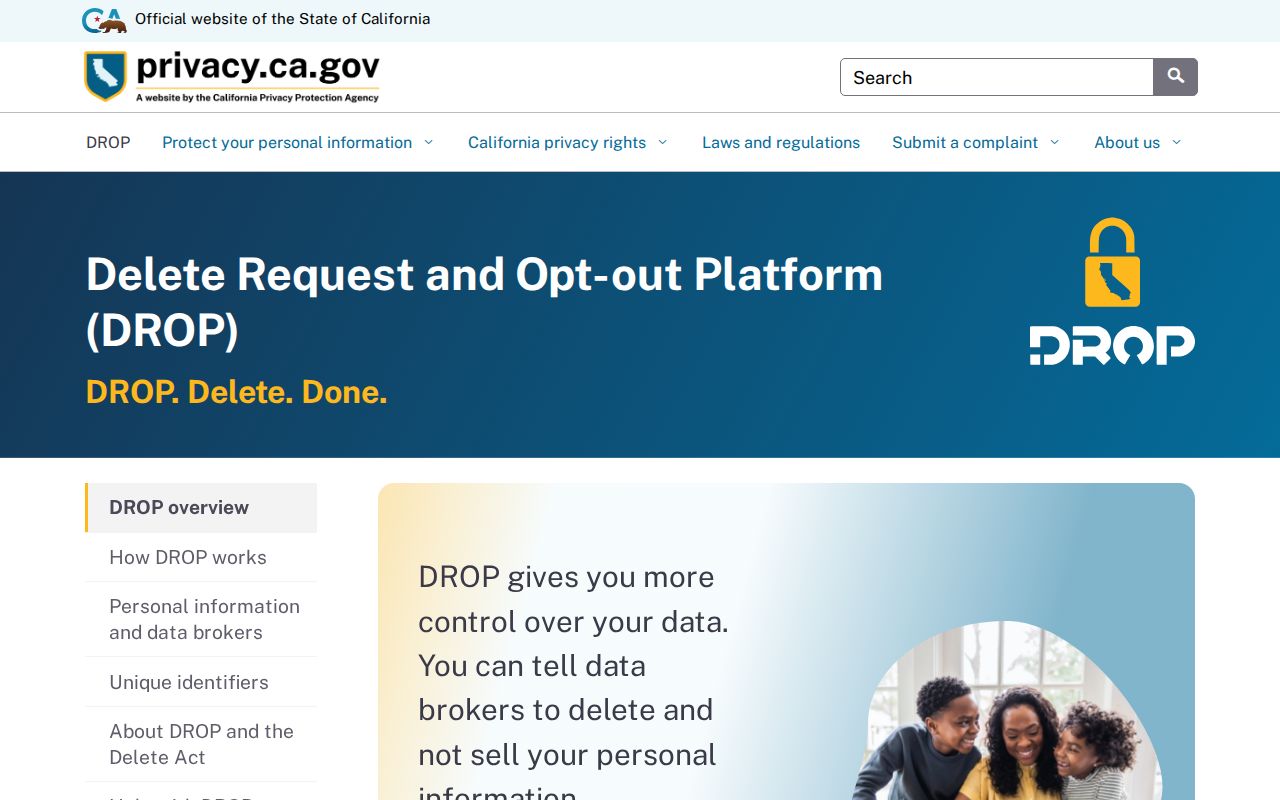
DROP covers data-broker copies only. It does not turn the San Leandro residents directory into an opt-out from official records.
San Leandro Resident Rolls Compared
A commercial people-finder blends public and private inputs. It charges for its report, merges same-name people, and can lag on corrections. Official custodians keep narrower records. But they offer a clear field definition, a source date, and a real correction path. Treat a compiler only as a lead. Then go back to the record office that created the fact.
| Question | Official record route | Commercial compilation |
|---|---|---|
| Who owns a parcel? | Assessor clue, then Recorder instrument and legal description | May merge tax and deed data without showing the controlling image |
| Is a person registered? | Personal My Voter Status or qualified file request | May show a stale or inferred address |
| Did a case occur? | Correct Alameda court channel and public docket | May omit sealed, traffic, criminal, or newer records |
| How is a listing corrected? | Contact the originating Assessor, Recorder, court, election, or business office | Submit a separate data-broker correction or deletion request |
That contrast is why the San Leandro residents directory works best as a routing desk. A name, a date, a street, and a source field can all be checked. A polished report with no custodian trail cannot say whether two records describe one person.
San Leandro Resident History Context
Geography shapes what survives in San Leandro. Northeast neighborhoods like Bancroft, Broadmoor, Hollywood, Creekside, and Estudillo Estates still carry 1910-40 street grids. They also hold older building patterns. Mulford Gardens shows up in local agricultural and family images. Later subdivisions often leave more permit and tract evidence than early directory coverage. The right first source depends on where the property sits.
Street history can explain an address that seems missing. A History Room caption identifies Ward Street as now Estudillo. The 379 Herma Court study shows that court absent until 1925. A road may have been renamed. It may have been newly built. Bridge it with the APN, legal description, dated Sanborn sheet, directory street section, and tract records.
The record carries social history too. Local research documents racial covenant language in San Leandro CC&Rs starting in 1915. A 1948 legal shift made such covenants unenforceable. A deed or directory was produced inside unequal systems. It was not a neutral count of everyone in town. Read names, absences, and labels with that limit in view.
The California Department of Consumer Affairs search shows how a public license adds affiliation context. It never becomes a residence list.
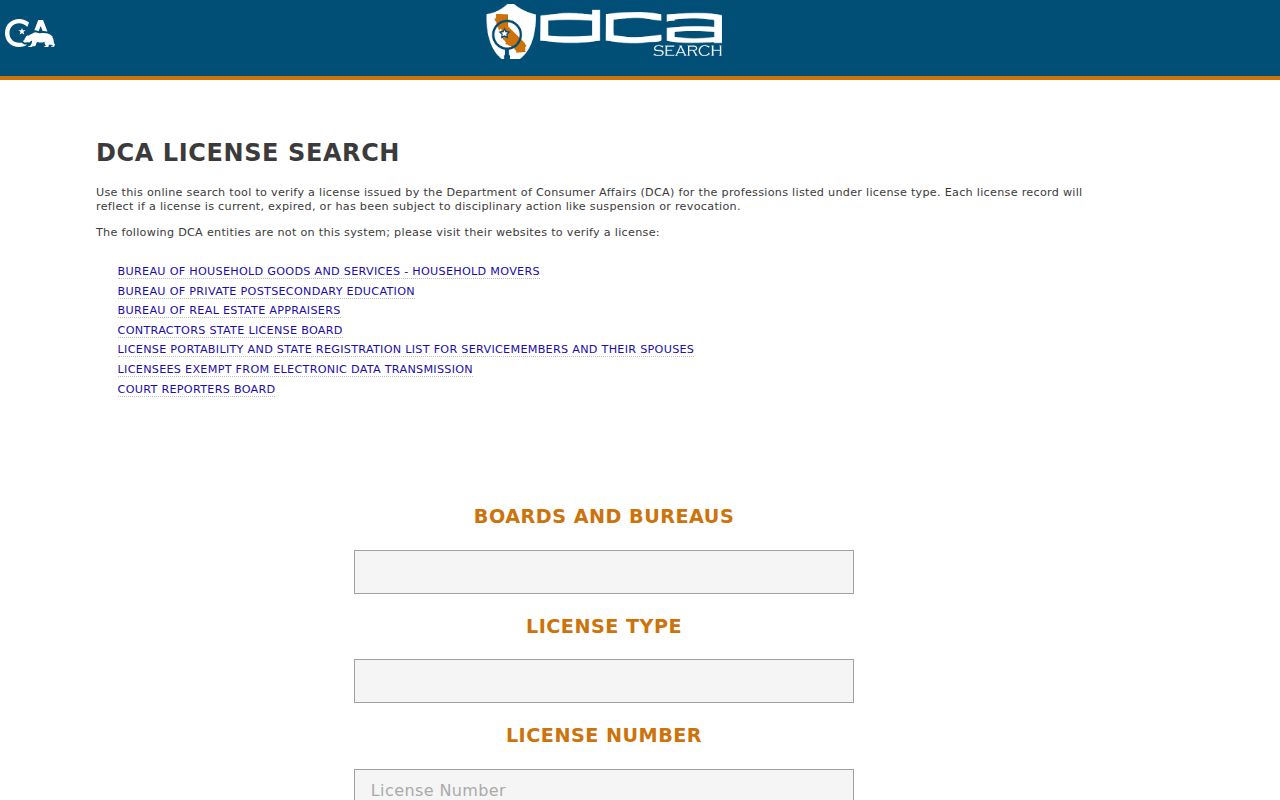
A license result is useful only when its board, status, dates, and public business address are kept distinct from a home address.
San Leandro Resident Privacy
A blank spot in a San Leandro residents directory can be a shield. It is not a failure. California's Safe at Home program gives qualifying participants a substitute mailing address. It also provides confidential mail forwarding under Government Code sections 6205 through 6216. Voter records carry their own access limits. So do confidential marriages, juvenile and sealed court files, DMV data, and certain protected addresses. A public record is not the same thing as an open web directory. That distinction matters for anyone doing a resident lookup here.
Fix the record at its source before asking a compiler to update its copy. An assessment error belongs to the Assessor. A deed problem belongs to the Recorder. A docket problem goes to the court. A voter registration issue goes to the Registrar. Business filings go to the Secretary of State or the county FBN custodian. California's DROP platform covers broker data only, never the official record itself.